Thursday, July 24, 2014

Caldecott Award Winners

The Caldecott Medal was named in honor of nineteenth-century English illustrator Randolph Caldecott.  It is awarded annually by the Association for Library Service to Children, a division of the American Library Association, to the artist of the most distinguished American picture book for children.

2014 Honor

Wiesner, D. (2013). Mr. Wuffles. New York, NY: Clarion Books.

Mr. Wuffles, the cat, ignores all of the cat toys his master gives him.  When a miniature spaceship manned by tiny green aliens appears amongst his toys, Mr. Wuffles plays with it roughly, damaging the spaceship.  The aliens are forced to go into hiding as they try to repair their ship.  They meet some insects who have also been harassed by the cat.  Together, they find a way to repair the space ship.
Mr Wuffles Resources for Award Winning Picture Books │JLG’s Booktalks to Go

Follow-up:  Visit the Website of David Wiesner at http://www.hmhbooks.com/wiesner/mr-wuffles.html.  Read Wiesner’s biography, watch Mr. Wuffles book trailers, and find out about the creative process that went into the artwork of the book.


2008 Winner

Selznick, B. (2007). The invention of Hugo Cabret. New York, NY: Scholastic Press.


Hugo lives in the walls of a busy Paris train station.  He keeps hidden and continues his deceased uncle’s job of keeping the many station clocks wound and running, with all the gears and levers moving accurately.  He must not be discovered or he, an orphan, will be locked up and sent away.  When his world suddenly connects with a bookish girl and a bitter old man who runs a toy booth in the train station, Hugo’s undercover life and most precious secret are put in jeopardy.  The mystery intensifies as Hugo strives to solve the mystery of the hidden message from his father, using a drawing, a notebook, a stolen key, and a mechanical man.
The Invention of Hugo Cabret,9780439813785
Follow-up: Click the link by Scholastic to find these great activities.  You can sign up for free.
Students will enjoy these engaging interactive activities that bring the book to life.  Students can:
  • Listen and watch the author share his writing and illustrating process of the book with “Inventing Hugo Cabret.”
  • Discover Hugo Cabret by listening and following along to this audio excerpt of the mystery.
  • Browse a slideshow of Selznick’s drafts of the cover to see how it evolved with “Invention of Cover.”
  • Watch the Author Video to find out what inspired him to write the Invention of Hugo Cabret.
  • Collect everything they need to build their own automaton collection.
  • Move Hugo around the Mechanical Maze, answering questions as they go.
  • Put their know-how to the test as they build and repair mechanical men with Automaton Workbench!
  • Use the Book Creator to create their own original, printable stories!
  • Meet the Author with this brief bio of Selznick.
  • Read a Q&A with Brian Selznick, where he discusses the writing process, his favorite books as a kid, and more.
  • Read “More from Brian Selznick” on other books he’s illustrated.
  • Get recommendations for More Best Books that Hugo Cabret fans will love.
     
Learning Objectives
While participating in “Flashlight Readers,” students will:
·         Offer observations, make connections, react, speculate, interpret, and raise questions in response to text
·         Identify and discuss book themes, characters, plots, and settings
·         Connect their experiences with those of the author and/or with characters from the books
·         Support predictions, interpretations, conclusions, etc. with examples from text
·         Practice key reading skills and strategies (cause-and-effect, problem/solution, compare-and-contrast, summarizing, etc.)
·         Monitor their own comprehension

·         Discuss ideas from the book with you, the author, and/or other students online

Wednesday, July 23, 2014

Morris Award Winners

The William C. Morris Debut YA Award, first awarded in 2009, honors a debut book published by a first-time author writing for teens and celebrating impressive new voices in young adult literature.

2012 Finalist

McCall, G.G. (2011). Under the mesquite. New York, NY: Lee & Low Books Inc.


Lupita, the oldest of eight children, discovers that her mother has been diagnosed with cancer.  Though she is used to being in control, now she must face many trials as she tries to help keep the family together, make it through her high school classes, and learn to be a better actress.  With her father consumed with the care of her mother, it is up to Lupita to care for her siblings.  She seeks refuge from the fear and chaos by writing in the shade of a mesquite tree.  A poet and promising actress, Lupita’s voice resonates in free verse form as she tells her poignant, heart-wrenching story of pain, love, and resilience in the face of tragedy.  Like the thorny mesquite that has taken root in the middle of her mother’s rose garden, Lupita is a survivor who will not be uprooted.
Note:  This book also won the 2012 Pura Belpré Award
 and the 2013 Tomas Rivera Children’s Book Award

Follow-up:


Meet the author: book reading in Spanish and English.  Guadalupe Garcia McCall introduces and shares some of the back story for creating Under the Mesquite.

View the book trailer for the book: </a>
">https://www.youtube.com/watch?v=a4D70BoguoA

2010 Finalist

Garcia, K. & Stohl, M. (2009). Beautiful creatures. New York, NY: Little, Brown, and Company.


Sixteen-year-old Ethan Wate is eager to escape the small South Carolina town of Gatlin, the epicenter of the middle of nowhere, where practically nothing has changed since the Civil War.  He is haunted by dreams of a beautiful girl who slips through his fingers while he tries to save her.  When a new girl, Lena Duchannes, moves into town, Ethan finds he is drawn to her.  He realizes that she is the mysterious girl of his dream and is determined to uncover the connection between them.  Lena is struggling to conceal her power and a curse that has haunted her family for generations.  As they begin a friendship, Ethan learns of the dark secret that is to be revealed on Lena’s sixteenth birthday.

Follow-up:  Here are some ideas from http://www.bookrags.com/lessonplan/beautiful-creatures
Essay Topic
Describe and discuss the setting of Gatlin, South Carolina, as depicted in the opening of Beautiful Creatures. How does the narrator feel about his hometown? How does his father describe the town? How large is the town?
Essay Topic
Describe and analyze the character of Ethan Wate in Beautiful Creatures. How old is Ethan? What can you tell about his character based on his narrative style and comments about the townspeople of Gatlin? How does Ethan change in the course of the story?
The Evolution of Supernatural Literature

Beautiful Creatures is one of many novels written that centers on the supernatural. Conduct research and develop a presentation that examines the evolution of “monster stories,” “vampire novels,” and other supernatural literature.


Tuesday, July 22, 2014

Geisel Award Winners

The Theodor Seuss Geisel Award, established in 2004, is given annually (beginning in 2006) to the author(s) and illustrator(s) of the most distinguished contribution to the body of American children’s literature known as beginning reader books published in the United States during the preceding year.

2014 Honor

Willems, M. (2013). A big guy took my ball! New York, NY: Hyperion Books.


Piggie is upset because a big guy takes a ball that she finds.  The elephant, Gerald, goes to get the ball back, but finding a big whale has it, changes his mind.  Gerald and Piggie find a way for everyone to play with the ball.
15944573

Follow-up:  Here are some books with the similar theme of bullying to complement the reading:

Dudley, B. R. (2013). Siggy and the bullies. Indianapolis, IN: Dog Ear Publishing.
Siggy and the Bullies is a charming adventure with an important message about bullying for younger readers. Beautifully illustrated, the book tells the story of Siggy, a lovable one-winged mockingbird who is bullied by two larger birds. Siggy's quick thinking and talent help him escape a high-speed chase, turn the table on the bullies, and win the admiration of his friends and adopted family. Siggy's story, complete with discussion questions, can be a useful tool in helping parents, teachers- and anyone who loves a child-teach kids how to stay safe, if being bulled. Siggy's tale is also unique in its approach to fostering simple communication about diversity, tolerance, and overcoming physical challenges.

Fox, D. (2009). Good-bye bully machine. Minneapolis, MN: Free Spirit Pub.
The unique format helps kids understand the definition and impact of bullying by comparing it to a mean machine—the Bully Machine. Kids can see how bullying makes the machine grow more imposing, while kind behaviors dismantle it.  Through the machine, kids gain awareness of their role in bullying, whether they are targets, bullies, bystanders—or all three. The role of the bystander is especially important. Good-Bye Bully Machine helps kids see the power of the bystander to become an ally, which means learning to show empathy, engage in kind acts, and take a stand against bullying. It's a perfect way to engage reluctant readers and hard-to-reach kids.

Kaufman, G. (1999). Stick up for yourself. Minneapolis, MN: Free Spirit Pub.
Newly revised and updated, it’s the ultimate resource for any kid who’s ever been picked on at school, bossed around, blamed for things he or she didn’t do, or treated unfairly—and for any kid who sometimes feels frustrated, angry, powerless, or scared. Simple words and real-life examples show how children can stick up for themselves with other kids (including bullies and teasers), big sisters and brothers, even grown-ups. Kids learn how to build relationships, become responsible, manage their anger, grow a “feelings vocabulary,” make good choices, solve problems, set goals, and “store” happiness and pride. Questions from real kids are paired with answers about how to handle specific situations calmly, confidently, and effectively. A special note to parents and teachers explores the “self-esteem backlash” and explains what self-esteem really is—and why kids today need it more than ever.

2013 Honor

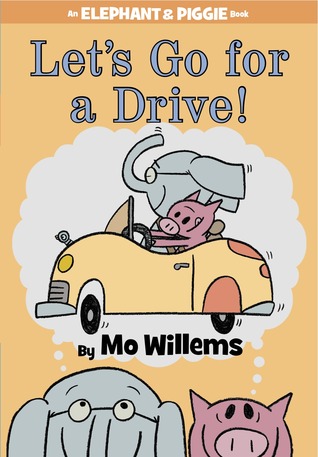
Willems, M. (2012). Let’s go for a drive! New York, NY: Hyperion Books.

Gerald, the elephant, and Piggie want to go for a drive.  Gerald keeps thinking of things they need for the drive, while Piggie rushes around gathering up the needed items.  After collecting a map, sunglasses, umbrellas, and suitcases, they realize that they are missing the most important item of all.  Piggie thinks of a way to have fun anyway.
13624190

Follow-up:
Here is a video performed in a school library by two teachers that should be viewed after the reading.
The link is https://www.youtube.com/watch?v=iLIWd-0tFAw


You can use Elephant and Piggie animals with props when telling the story.  Here is a picture of me during a storytelling session this past May.

Sibert Award Winners

The Robert F. Sibert Informational Book Medal honors the most distinguished informational book published in English in the preceding year for its significant contribution to children’s literature.

2014 Honor

Floca, B. (2013). Locomotive. New York, NY: Atheneum Books.


Follow two children as they head west with their mother from Omaha, Nebraska to Sacramento, California to join their father in a new life.  It is the summer of 1869 as they travel on America’s first  transcontinental railroad.  The poetic text and vivid illustrations provide factual information about early train travel while causing the readers to feel as if they are along for the ride as they encounter the brakemen, fireman, engineer, and conductor.  The pages come to life with details of the trip, the speed and strength of the powerful locomotives, and the thrills, dangers, and hardships of train travel.
LocomotiveNOTE: This book also won the 2014 Caldecott medal.
Follow-up: 

Click on the link to find a downloadable curriculum guide to Locomotive by Simon & Schuster.  The guide includes discussion questions/activities, key ideas and details, craft & structure, and useful Web sites.


Students can see what it’s like to visit a train.  Click on the link to download “Ride This Train!” – A PDF 
from Trains Magazine listing railroad destinations across the United States.


2014 Honor

Greenberg, J. (2013). The Mad Potter: George E. Ohr, Eccentric Genius. New York, NY: Roaring Brook Press.

The story of eccentric George Ohr, creator of strangely crafted pots and vases, is told through quotes and photos of his pottery and his work place.  Ohr discovered his passion for pottery and focused on developing his skill by studying the work of others and trying it himself.  He became a tourist attraction in Biloxi where he established a studio.  He took his thousands of unique pieces to fairs and art shows, but nobody seemed interested in buying his odd pottery with ruffled vases, undulating pitchers, and other curious shapes.  He eventually retired and hid hundreds of his ceramics.  When George Ohr’s collection was discovered in 1967, years after his death, his gift was realized.  As Ohr had bragged, his work became priceless and is now displayed in museums.
The Mad Potter: George E. Ohr, Eccentric Genius
Follow-up:

Students can visit the George Ohr website: http://georgeohr.org/.  This website has pictures of Ohr’s pottery, as well as family pictures and biographical information.

Follow this link to the author, Jan Greenberg’s website: http://jangreenbergsandrajordan.com/

An online publication of the Mississippi Historical Society provides a lesson plan to complement the book.  It can be found at: http://mshistory.k12.ms.us/index.php?id=31.

Saturday, July 19, 2014

Newbery Award Winners

The John Newbery Medal is awarded annually by the Association for Library Service to Children, a division of the American Library Association, to the author of the most distinguished contribution to American literature for children.

2014 Newbery Winner

DiCamillo, K. (2013). Flora and Ulysses: The illuminated adventures. Somerville, MA: Candlewick Press.

Flora is obsessed with superhero comics.  Perhaps this is why she unhesitatingly saves the hapless squirrel who suffers a near-fatal encounter with the neighbor’s vacuum cleaner.  She recognizes the catastrophic accident as the beginning of yet another superhero story, a story with an amazing squirrel that can fly and type poetry.  Since her parents’ break-up, Flora has become a cynic, but discovers hope and forgiveness.
Image result for flora and ulysses

Follow-up:
Candlewick Press provides an excellent Discussion Guide with questions to use with students before, during, and after the readings:  http://www.teachingbooks.net/media/pdf/Candlewick/Flora&Ulysses_DGuide.pdf

Here is a link to a video book trailer from the book’s Web site: http://www.floraandulysses.com/home.html


2014 Newbery Honor


Black, H. (2013). Doll Bones. NY: Margaret K. McElderry Books.

Zach, Poppy, and Alice have been friends for a long time and have always played an imaginative game of magic and adventure, pirates and thieves, mermaids and warriors, and a great Queen who curses those who displease her.  The Queen is an antique china doll that belongs to Poppy’s mother.  Using old dolls and action figures, the 12-year-old friends have created an elaborate game.  However, when Zach’s father humiliates him for playing with toys, Zach gives up the game and his friends.  That is, until he finds out that the Queen is made of the bones of a dead girl whose ghost will not rest until the bone-china doll is buried in her empty grave.  Zach, Poppy, and Alice set off on another adventure to lay the Queen’s ghost to rest, during which creepy things begin to happen.
Image result for doll bones

Follow-up:  Here are links to three book trailers.  Students could view them, rank them in order of favorite to least favorite, and talk about how they are the same and different.
https://www.youtube.com/watch?v=vKOsvXxkUmk


https://www.youtube.com/watch?v=fKEAkGZAjvo

Tuesday, July 1, 2014

Integrating the Uses of Technology for Learning and Teaching

The upsurge of electronic information resources provides libraries with the opportunity to combine products and processes of technology to support teaching and learning experiences.  The school librarian should encourage the use of technology as a catalyst of dynamic, constructive learning and teaching.

According to Information Power: Building Partnerships for Learning, the goals for the School Library Media Specialist are:

1.   Build and maintain expertise in assessing various technology products and processes for their potential to enhance learning
2.   Guide and assist the learning community in the use of new media and technologies for learning and teaching and in evaluating and selecting appropriate informational instructional resources
3.   Work collaboratively with teachers and others to use the principles of instructional design to create, implement, evaluate, and revise information-based learning activities
4.   Model and promote effective uses of technology for learning and teaching

American Association of School Librarians and Association for Educational Communications and Technology. (1998). Information power: building partnerships for learning. Chicago: American Library Association.


As a teacher of English Language Learners, I wanted to see my students effectively using technology to create and demonstrate learning.  During the study of the novel, Charlotte’s Web by E.B. White, I demonstrated various digital tools and allowed the students to play around with them as well.

First we watched YouTube book trailers about the book and found one that we liked.  I showed the class how easy it is to create QR codes using QRStuff.com.  There is nothing more to it than copying and pasting the link.  This way we create a direct link to the video we chose.  For the students who didn't already have a QR Reader on their smart phones, there are several free apps available.  Here is our QR code:  


Next, I used a podcast to create an audio test.  Students listened to the narration of five different characters from the book and wrote down who they thought each character was.  Because I had been suffering from a recent and severe bout of asthma, my voice is very coarse in the recordings.  The students had to rely on what was being said more than how it was being said.  After each character's words, the recording is paused for students to write their answers.


https://soundcloud.com/ruthannecassidy/sets/charlottes-web-characters


I showed students how to create a word cloud using Tagxedo.com. We used words from the novel to describe Wilbur, including the words that Charlotte spun into her web.


Finally, I showed students how to create comic strips.  I created an alternate ending to the novel using www.pixton.com.  The characters can be fine-tuned, changing their expressions one facial feature at a time.  Their heads, arms, hands, legs, and bodies can be rotated and the color of their hair and clothes can be changed.  The site has tutorial videos, but students are more likely to want to just get in there and create.  Since I couldn't find a spider (Charlotte) among character choices, I decided to show what would happen if Charlotte was not in the story. Students can use this tool to portray scenes or create alternate endings, as I did.


Younger or less tech-savvy students may find toondoo.com or MakeBeliefsComix.com easier to manipulate.


With these and other digital tools, the librarian can design learning activities that encourage creative and innovative uses of technological formats.  The librarian can also work collaboratively with teachers to select appropriate technology as resources.