Tuesday, July 22, 2014

Geisel Award Winners

The Theodor Seuss Geisel Award, established in 2004, is given annually (beginning in 2006) to the author(s) and illustrator(s) of the most distinguished contribution to the body of American children’s literature known as beginning reader books published in the United States during the preceding year.

2014 Honor

Willems, M. (2013). A big guy took my ball! New York, NY: Hyperion Books.


Piggie is upset because a big guy takes a ball that she finds.  The elephant, Gerald, goes to get the ball back, but finding a big whale has it, changes his mind.  Gerald and Piggie find a way for everyone to play with the ball.
15944573

Follow-up:  Here are some books with the similar theme of bullying to complement the reading:

Dudley, B. R. (2013). Siggy and the bullies. Indianapolis, IN: Dog Ear Publishing.
Siggy and the Bullies is a charming adventure with an important message about bullying for younger readers. Beautifully illustrated, the book tells the story of Siggy, a lovable one-winged mockingbird who is bullied by two larger birds. Siggy's quick thinking and talent help him escape a high-speed chase, turn the table on the bullies, and win the admiration of his friends and adopted family. Siggy's story, complete with discussion questions, can be a useful tool in helping parents, teachers- and anyone who loves a child-teach kids how to stay safe, if being bulled. Siggy's tale is also unique in its approach to fostering simple communication about diversity, tolerance, and overcoming physical challenges.

Fox, D. (2009). Good-bye bully machine. Minneapolis, MN: Free Spirit Pub.
The unique format helps kids understand the definition and impact of bullying by comparing it to a mean machine—the Bully Machine. Kids can see how bullying makes the machine grow more imposing, while kind behaviors dismantle it.  Through the machine, kids gain awareness of their role in bullying, whether they are targets, bullies, bystanders—or all three. The role of the bystander is especially important. Good-Bye Bully Machine helps kids see the power of the bystander to become an ally, which means learning to show empathy, engage in kind acts, and take a stand against bullying. It's a perfect way to engage reluctant readers and hard-to-reach kids.

Kaufman, G. (1999). Stick up for yourself. Minneapolis, MN: Free Spirit Pub.
Newly revised and updated, it’s the ultimate resource for any kid who’s ever been picked on at school, bossed around, blamed for things he or she didn’t do, or treated unfairly—and for any kid who sometimes feels frustrated, angry, powerless, or scared. Simple words and real-life examples show how children can stick up for themselves with other kids (including bullies and teasers), big sisters and brothers, even grown-ups. Kids learn how to build relationships, become responsible, manage their anger, grow a “feelings vocabulary,” make good choices, solve problems, set goals, and “store” happiness and pride. Questions from real kids are paired with answers about how to handle specific situations calmly, confidently, and effectively. A special note to parents and teachers explores the “self-esteem backlash” and explains what self-esteem really is—and why kids today need it more than ever.

2013 Honor

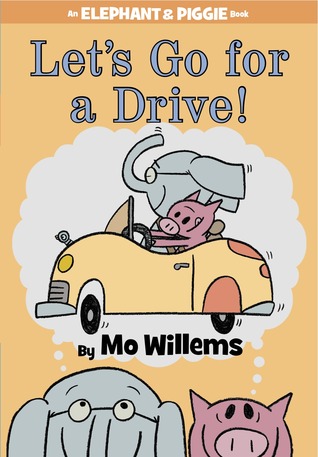
Willems, M. (2012). Let’s go for a drive! New York, NY: Hyperion Books.

Gerald, the elephant, and Piggie want to go for a drive.  Gerald keeps thinking of things they need for the drive, while Piggie rushes around gathering up the needed items.  After collecting a map, sunglasses, umbrellas, and suitcases, they realize that they are missing the most important item of all.  Piggie thinks of a way to have fun anyway.
13624190

Follow-up:
Here is a video performed in a school library by two teachers that should be viewed after the reading.
The link is https://www.youtube.com/watch?v=iLIWd-0tFAw


You can use Elephant and Piggie animals with props when telling the story.  Here is a picture of me during a storytelling session this past May.

Sibert Award Winners

The Robert F. Sibert Informational Book Medal honors the most distinguished informational book published in English in the preceding year for its significant contribution to children’s literature.

2014 Honor

Floca, B. (2013). Locomotive. New York, NY: Atheneum Books.


Follow two children as they head west with their mother from Omaha, Nebraska to Sacramento, California to join their father in a new life.  It is the summer of 1869 as they travel on America’s first  transcontinental railroad.  The poetic text and vivid illustrations provide factual information about early train travel while causing the readers to feel as if they are along for the ride as they encounter the brakemen, fireman, engineer, and conductor.  The pages come to life with details of the trip, the speed and strength of the powerful locomotives, and the thrills, dangers, and hardships of train travel.
LocomotiveNOTE: This book also won the 2014 Caldecott medal.
Follow-up: 

Click on the link to find a downloadable curriculum guide to Locomotive by Simon & Schuster.  The guide includes discussion questions/activities, key ideas and details, craft & structure, and useful Web sites.


Students can see what it’s like to visit a train.  Click on the link to download “Ride This Train!” – A PDF 
from Trains Magazine listing railroad destinations across the United States.


2014 Honor

Greenberg, J. (2013). The Mad Potter: George E. Ohr, Eccentric Genius. New York, NY: Roaring Brook Press.

The story of eccentric George Ohr, creator of strangely crafted pots and vases, is told through quotes and photos of his pottery and his work place.  Ohr discovered his passion for pottery and focused on developing his skill by studying the work of others and trying it himself.  He became a tourist attraction in Biloxi where he established a studio.  He took his thousands of unique pieces to fairs and art shows, but nobody seemed interested in buying his odd pottery with ruffled vases, undulating pitchers, and other curious shapes.  He eventually retired and hid hundreds of his ceramics.  When George Ohr’s collection was discovered in 1967, years after his death, his gift was realized.  As Ohr had bragged, his work became priceless and is now displayed in museums.
The Mad Potter: George E. Ohr, Eccentric Genius
Follow-up:

Students can visit the George Ohr website: http://georgeohr.org/.  This website has pictures of Ohr’s pottery, as well as family pictures and biographical information.

Follow this link to the author, Jan Greenberg’s website: http://jangreenbergsandrajordan.com/

An online publication of the Mississippi Historical Society provides a lesson plan to complement the book.  It can be found at: http://mshistory.k12.ms.us/index.php?id=31.

Saturday, July 19, 2014

Newbery Award Winners

The John Newbery Medal is awarded annually by the Association for Library Service to Children, a division of the American Library Association, to the author of the most distinguished contribution to American literature for children.

2014 Newbery Winner

DiCamillo, K. (2013). Flora and Ulysses: The illuminated adventures. Somerville, MA: Candlewick Press.

Flora is obsessed with superhero comics.  Perhaps this is why she unhesitatingly saves the hapless squirrel who suffers a near-fatal encounter with the neighbor’s vacuum cleaner.  She recognizes the catastrophic accident as the beginning of yet another superhero story, a story with an amazing squirrel that can fly and type poetry.  Since her parents’ break-up, Flora has become a cynic, but discovers hope and forgiveness.
Image result for flora and ulysses

Follow-up:
Candlewick Press provides an excellent Discussion Guide with questions to use with students before, during, and after the readings:  http://www.teachingbooks.net/media/pdf/Candlewick/Flora&Ulysses_DGuide.pdf

Here is a link to a video book trailer from the book’s Web site: http://www.floraandulysses.com/home.html


2014 Newbery Honor


Black, H. (2013). Doll Bones. NY: Margaret K. McElderry Books.

Zach, Poppy, and Alice have been friends for a long time and have always played an imaginative game of magic and adventure, pirates and thieves, mermaids and warriors, and a great Queen who curses those who displease her.  The Queen is an antique china doll that belongs to Poppy’s mother.  Using old dolls and action figures, the 12-year-old friends have created an elaborate game.  However, when Zach’s father humiliates him for playing with toys, Zach gives up the game and his friends.  That is, until he finds out that the Queen is made of the bones of a dead girl whose ghost will not rest until the bone-china doll is buried in her empty grave.  Zach, Poppy, and Alice set off on another adventure to lay the Queen’s ghost to rest, during which creepy things begin to happen.
Image result for doll bones

Follow-up:  Here are links to three book trailers.  Students could view them, rank them in order of favorite to least favorite, and talk about how they are the same and different.
https://www.youtube.com/watch?v=vKOsvXxkUmk


https://www.youtube.com/watch?v=fKEAkGZAjvo

Tuesday, July 1, 2014

Integrating the Uses of Technology for Learning and Teaching

The upsurge of electronic information resources provides libraries with the opportunity to combine products and processes of technology to support teaching and learning experiences.  The school librarian should encourage the use of technology as a catalyst of dynamic, constructive learning and teaching.

According to Information Power: Building Partnerships for Learning, the goals for the School Library Media Specialist are:

1.   Build and maintain expertise in assessing various technology products and processes for their potential to enhance learning
2.   Guide and assist the learning community in the use of new media and technologies for learning and teaching and in evaluating and selecting appropriate informational instructional resources
3.   Work collaboratively with teachers and others to use the principles of instructional design to create, implement, evaluate, and revise information-based learning activities
4.   Model and promote effective uses of technology for learning and teaching

American Association of School Librarians and Association for Educational Communications and Technology. (1998). Information power: building partnerships for learning. Chicago: American Library Association.


As a teacher of English Language Learners, I wanted to see my students effectively using technology to create and demonstrate learning.  During the study of the novel, Charlotte’s Web by E.B. White, I demonstrated various digital tools and allowed the students to play around with them as well.

First we watched YouTube book trailers about the book and found one that we liked.  I showed the class how easy it is to create QR codes using QRStuff.com.  There is nothing more to it than copying and pasting the link.  This way we create a direct link to the video we chose.  For the students who didn't already have a QR Reader on their smart phones, there are several free apps available.  Here is our QR code:  


Next, I used a podcast to create an audio test.  Students listened to the narration of five different characters from the book and wrote down who they thought each character was.  Because I had been suffering from a recent and severe bout of asthma, my voice is very coarse in the recordings.  The students had to rely on what was being said more than how it was being said.  After each character's words, the recording is paused for students to write their answers.


https://soundcloud.com/ruthannecassidy/sets/charlottes-web-characters


I showed students how to create a word cloud using Tagxedo.com. We used words from the novel to describe Wilbur, including the words that Charlotte spun into her web.


Finally, I showed students how to create comic strips.  I created an alternate ending to the novel using www.pixton.com.  The characters can be fine-tuned, changing their expressions one facial feature at a time.  Their heads, arms, hands, legs, and bodies can be rotated and the color of their hair and clothes can be changed.  The site has tutorial videos, but students are more likely to want to just get in there and create.  Since I couldn't find a spider (Charlotte) among character choices, I decided to show what would happen if Charlotte was not in the story. Students can use this tool to portray scenes or create alternate endings, as I did.


Younger or less tech-savvy students may find toondoo.com or MakeBeliefsComix.com easier to manipulate.


With these and other digital tools, the librarian can design learning activities that encourage creative and innovative uses of technological formats.  The librarian can also work collaboratively with teachers to select appropriate technology as resources.

Monday, May 12, 2014

Among the Hidden book trailer

This is a book trailer I created using Animoto of the book Among the Hidden by Margaret Peterson Haddix of the Shadow Children sequence.

Thursday, May 1, 2014

Technology - The Final Frontier

Technology - the final frontier.  This has been quite a voyage.   My one semester mission: to explore strange new worlds.

I admit I was more than a bit nervous about taking a course dealing with technology and internet tools.  Though I had a Facebook account, a Twitter account that I never used, a newly purchased iPhone, and I  shopped on Amazon, that was about the extent of my internet expertise.  But since this was a required course and I was determined to keep my A-average, I held my nose, closed my eyes, and jumped in shrieking.

I struggled with each new assignment and tool, probably taking a lot longer to tackle and complete the assignments than my tech-savvy classmates.  But I persisted, and mostly the technology didn't bite me, though it sometimes snapped at me.  I was so proud of my finished creations that I forced my colleagues, my husband, and even my students to ooh and aaahh over them.

I have many favorites, but my particular favorite is Animoto.  I worked so hard on my book trailer, and I was so pleased with how it came out.  I know that as a librarian, I will be creating many book trailers to show on the HD TV screen that I will request.  I also really liked making Quipios; I still make them just for fun whenever I come across a phrase that pleases me or whenever I think a brilliant thought (that pleases me).  My students and I had fun with Vine, so I know I will be using it time and time again.  Plus, it was so easy, even for me!  The comic strips were another favorite of mine.

Most of the tools had a difficulty factor for me (except for Instagram and Vine).  One that proved particularly tricky was Information Curation.  When using Scoop.it, I had trouble picking a topic that would yield what I sought.  I was looking for decorating tips to go with my theme idea for a library, but the suggestions provided were laughably way off the mark.  After trying several search terms, I finally gave up and chose a new topic.  Paper.li proved to be even more frustrating.  Almost everything I chose gave me the message, "Sorry, no content found."  I got the feeling they were referring to my brains!  With all of the tools, I struggled with finding and enabling the embed codes, though as you can see from previous posts, I usually succeeded after pulling out much hair.  The screencasts were a bit tricky for me, mostly because of the time limit on the free accounts.  I struggled getting everything said before I timed out.

Many of the tools will be beneficial to students, both in the classroom and in the library.  I've mentioned how much I liked the comics.  When I first began creating them, I found myself thinking that they needed to be funny like the comics in the newspaper.  But this is not true.  They can be used in many ways to express ideas with pictures and a few words.  Here is one I made just yesterday for my ESL class who is reading There's a Boy in the Girls' Bathroom.
Boy in GirlsOMG! - I embedded it, see?

It simply shows a scene from the book.  It could also be used to show cause-and-effect.

I really liked Playing With Words - making word clouds.  Again, for an ESL classroom this is very beneficial.  I've had students pick a character from the aforementioned book and think of words to describe their chosen character.  A character trait they thought was most important was typed 10 times, with other traits being typed less times, depending on relevancy.  The students loved this activity. They loved picking colors, fonts, and shapes.  Webbing/Mindmapping tools are great notetaking/brainstorming tools.  Infographics are great tools to use with research and inquiry-based lessons.  And I liked making podcasts to use as listening tests for ESL students.

All things considered, I think this has been my favorite class in my Library Science studies.  I stepped out of my comfort zone and learned so much useful and fun stuff.  I hope that I will continue to explore strange new worlds, to seek out new tools and new technology, to boldly go where I have never dared venture before.

Monday, April 28, 2014

Pew Research - Information Sharing, Friending, and Privacy Settings on Social Media

Madden, M. & Lenhart, A. (2013). Part 2: information sharing, friending, and privacy settings on social media. Pew Research Center’s Internet & American Life Project. Retrieved from http://www.pewinternet.org/2013/05/21/part-2-information-sharing-friending-and-privacy-settings-on-social-media/

I have now read several articles on the subject of teens’ consideration of privacy settings and am continually and pleasantly surprised to find that they actually think about these things.  I guess I assumed that teens were egg heads who felt themselves to be invincible and in no need of protection. 

Teens share a lot of information about themselves on social media sites.  Most teens, however, do not adopt a fully public style when using social media.  Most of them post their real name. Or else how would their friends find them?  Most of them post a photo of themselves.  Or else how would their friends recognize them?  71% post their school name and city or town where they live.  This may not be the best idea.  53% post their email address.  This is definitely not a good idea.  20% post their cell phone number.  Okay, these are the egg heads.  What are they thinking?  Maybe they are proud to be owners of cell phones and it is an expression of independence.  Boys are more likely than girls to share their cell phone number.  African-American teens are less likely to disclose their real names.  I wonder why that is?  I have read this before.

Reputation management seems to be a big concern of teens.  It is interesting to read the survey comments in this article.  Teens, especially girls, are very concerned about their Facebook profile pictures and other photos of themselves.  One girl said that she would message “a ton” of photos to her friends, asking which one should be her profile. Another said that if her photo had less than 20 likes, she would take it down.  Likes are status symbols apparently, as one teen declared that your social position is determined by the number of likes your picture gets.  Some have discovered that you get more likes by posting a picture at a prime time.  I’m so glad I’m not a teen.  In my day, we only worried about zits and our jeans fitting tight enough!

In addition to choosing privacy settings, teens choose different people to add to their friend network.  Most choose school friends, friends from outside of school, and extended family members.  Older teens tend to be Facebook friends with a larger variety of people, while younger teens are less likely to friend certain groups, including those they haven’t met in person.  I often have my middle school students ask to be friends with me on Facebook and I always tell them no, it’s not allowed.  Sometimes they friend request me later when they’re in high school.  If they had been a very special student whom I remember with fondness, I usually accept their request, though I may later, quietly, delete them.   MY STATUS DOES NOT RELY UPON HOW MANY FACEBOOK FRIENDS I HAVE, NOR HOW MANY LIKES MY PHOTOS GET.

Most teens have checked their Facebook privacy setting relatively recently and keep their Facebook profile private.  Girls are more likely than boys to restrict access to their profiles.  They feel confident in their management of privacy settings, yet relatively few take steps to customize what certain friends can see, or what their parents can see for that matter.

The article also discusses teen Twitter use.  The majority of teen Twitter users have public accounts.  Like on Facebook, teens are confident in their own privacy regulation.  The typical teen Twitter user has 79 followers, far fewer than Facebook friends.


[28 pages]